Understanding your audience is the foundation of every successful marketing strategy. At Roccai, we believe that asking the right questions unlocks powerful insights — the kind that fuel better content, smarter products, and stronger customer relationships. But how do you know which questions to ask, and how to ask them?
Here’s a practical guide to help you craft the right questions to truly understand your audience and drive meaningful engagement.
Why Asking the Right Questions Matters
When you ask clear, purposeful questions, you:
Gain deep insights into your audience’s needs, pain points, and motivations.
Build genuine connections and make your audience feel heard.
Improve the accuracy of your product or service positioning.
Strengthen your brand voice and tailor your messaging more effectively.
Whether you’re conducting surveys, user interviews, or social media polls, the quality of your questions defines the value of your answers.
Step 1: Start With a Clear Goal
Before you ask anything, define what you’re hoping to learn. Are you trying to validate a new product idea? Improve the user experience on your website? Refine your content strategy?
A clear objective will guide the type of questions you ask and ensure your findings are actually useful. For example, if your goal is to understand why customers choose your product, a vague question like “What do you think of our brand?” might not help. A better question would be: “What made you choose our product over others?”
Step 2: Ask Open-Ended Questions
Open-ended questions are your best friend when it comes to understanding people. They encourage respondents to go deeper and share the “why” behind their choices. Questions like “What challenges were you facing before you found us?” or “What does success look like for you in using our service?” invite more thoughtful responses than simple yes/no prompts.
Make sure to avoid leading questions or those that combine multiple ideas. Keep your language clear, neutral, and easy to understand.
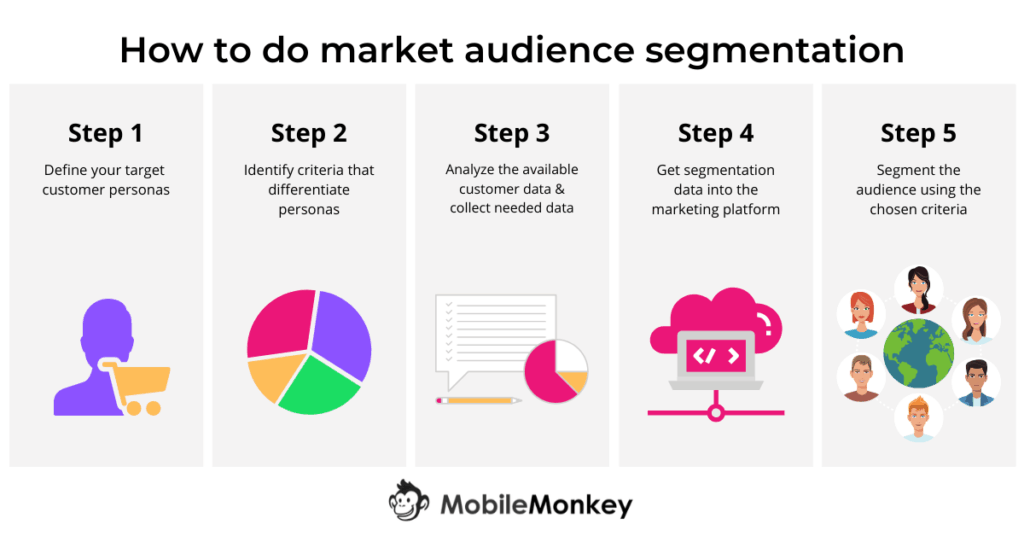
Step 3: Segment Your Audience
Not all customers are the same — and they shouldn’t be treated that way. Tailor your questions to different audience segments (e.g., new vs. returning users, B2B vs. B2C).
This way, your questions can address specific contexts and deliver more actionable insights.
This is an exemplary approach to conducting a market audience segmentation (Source: Customers.ai).
Step 4: Test and Refine Before Launch
Even well-crafted questions can fall flat if they’re misunderstood. Testing your questions with a small group allows you to identify confusing wording or unhelpful phrasing. It also helps you spot questions that might be too broad or try to do too much at once.
Use feedback from your test group to fine-tune your question list before scaling up to your full audience.
Step 5: Analyze and Take Action
Once you’ve gathered responses, take time to look for patterns. Are there recurring problems or suggestions? Do certain words or phrases keep coming up? These details can offer clues into your audience’s mindset and help you fine-tune your messaging, product features, or customer experience.
Don’t let the insights sit in a spreadsheet. Turn them into action. Create customer personas, adjust your content themes, or rework your onboarding flow—whatever aligns best with what your audience is telling you.
Guided by the Right Questions
At Roccai, we believe that great guidance begins with great questions — but knowing which questions to ask can be the hardest part. That’s why our platform helps you create question-based guides that are driven by data, not guesswork.
When your guide ends with product recommendations, our AI suggests the most relevant questions to help match users with the right products. That makes it fast and easy to build an effective guide.
Whether you’re collecting preferences, helping users navigate choices, or just getting to know your audience better, Roccai helps you ask smarter questions that lead to more confident decisions.
Ready to start asking better questions?
Book a demo or explore our guides to see how Roccai can support your customer journey. Contact us to learn how we can work together.
We’re living in a time where people care more than ever about how their personal information is used. That’s why businesses and marketers are rethinking their data strategies to focus on honesty and building real trust. You might’ve heard the term zero-party data popping up more and more — but this isn’t just another trendy phrase. It marks a real shift in how companies collect and use customer insights, returning control back in the hands of the consumer.
In this post, we’ll break down what zero-party data really means, how it’s different from first-, second-, and third-party data, and why it should be central to your digital marketing strategy.
What Is Zero-Party Data?
Zero-party data is data that a customer intentionally and proactively shares with a brand. This can include preference data, purchase intentions, personal context, and how the individual wants the brand to recognize them. This data is voluntarily given—think survey responses, preference center inputs, and interactive quizzes.
Unlike other types of data, zero-party data is not inferred, observed, or acquired through intermediaries. It’s direct, transparent, and based on mutual value exchange.
For example, when users respond to a quiz, customize their profile, or set communication preferences, they’re supplying zero-party data. This kind of data is gold for marketers because it comes straight from the source.
Zero-Party Data vs. First-, Second-, and Third-Party Data
Third-Party Data
Definition: Data collected by entities that don’t have a direct relationship with the user. Often aggregated from multiple sources.
Examples: Demographic or behavioral data purchased from data brokers.
Cons: Requires user engagement and value exchange.
Why Does It Matter in 2025
As third-party cookies disappear and privacy regulations like GDPR and CCPA evolve, brands need to prioritize ethical data collection. Zero-party data is shared directly and willingly by users, making it both compliant and incredibly valuable.
It ensures compliance with data privacy laws and gives brands better control over their data assets. Most importantly, it builds trust and enables brands to deliver more relevant, personalized experiences. Consumers are more likely to stay loyal when they feel heard and understood, and zero-party data makes that possible.
Other benefits:
Rather than passively gathering data, brands should actively engage users. Zero-party data is all about customers sharing information on their own terms — like telling you what they’re looking for, what they care about, or what they need help with.
With Roccai, collecting that kind of data feels natural. Instead of forms or tracking, you simply ask questions through swipe guides or short surveys built into the customer journey. People get value right away — and you get answers straight from the source. No guesswork. No hidden tracking. Just honest input from real people. It’s a simple way to understand your audience better and create more personal, helpful experiences.
Zero-party data isn’t just a passing trend—it’s the future of ethical, effective marketing. As privacy expectations rise and digital regulations evolve, brands that invest in voluntary, user-provided data will gain a competitive edge. Start collecting zero-party data today to personalize experiences, build stronger customer relationships, and future-proof your strategy.
When it comes to helping customers make the right choices online, personalization is everything. Today’s shoppers expect more than just a list of products — they want guidance, relevance, and experiences that feel tailored to their needs. At ROCCAI, we offer two distinct but complementary tools to improve user experience and drive results: the Product Guide and the Inspiration Guide. While both are designed to drive engagement and conversions, they serve very different purposes.
So, what’s the difference between a Product Guide vs Inspiration Guide — and more importantly, which one is the right fit for your goals?
Let’s break it down.
What Is a Product Guide?
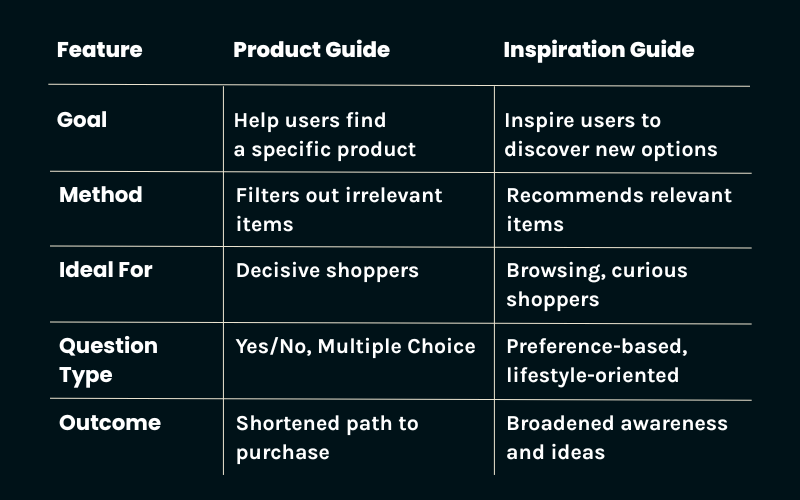
The Product Guide is your go-to tool for simplifying decision-making. It helps customers find exactly what they need by asking a series of yes/no or multiple-choice questions. Think of it as a personal shopping assistant that asks targeted questions to filter and narrow down product options. As users respond, the guide filters out products that don’t match their needs, ultimately presenting them with the best-fit options.
This guide works best when users come to your site with a clear purpose in mind but may feel overwhelmed by the many available choices. Instead of forcing them to scroll through endless categories or rely on broad filters, the Product Guide engages them in a quick, intuitive guide.
Each answer helps eliminate products that don’t match their criteria, leading them closer to a shortlist of highly relevant options.
Key Features:
Eliminates irrelevant products
Narrows down choices through clear decision paths
Perfect for customers who already know what they’re looking for
Builds confidence by delivering tailored results
Example:
Imagine a user looking for a new laptop. Instead of browsing through dozens of models, they answer a few specific questions:
“Do you need a touchscreen?”
“Is long battery life important?”
“What’s your primary use case — work, gaming, or study?”
Each answer helps refine the options, and the guide presents only the laptops that match their criteria — making the purchase decision fast, easy, and stress-free.
What Is an Inspiration Guide?
The Inspiration Guide is designed for a different kind of user — someone who’s open-minded, curious, or in the early stages of the buying journey. The Inspiration Guide spark discovery and inspiration. Instead of narrowing down choices, it opens up possibilities by suggesting products based on user preferences and interests. This guide is ideal for customers who are browsing without a specific product in mind but are open to being inspired.
Key Features:
Recommends rather than filters
Suggests new options the customer may not have considered
Perfect for early-stage browsing and idea generation
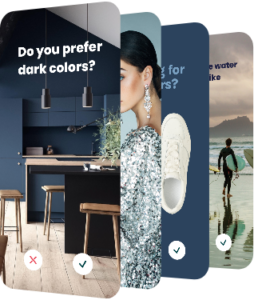
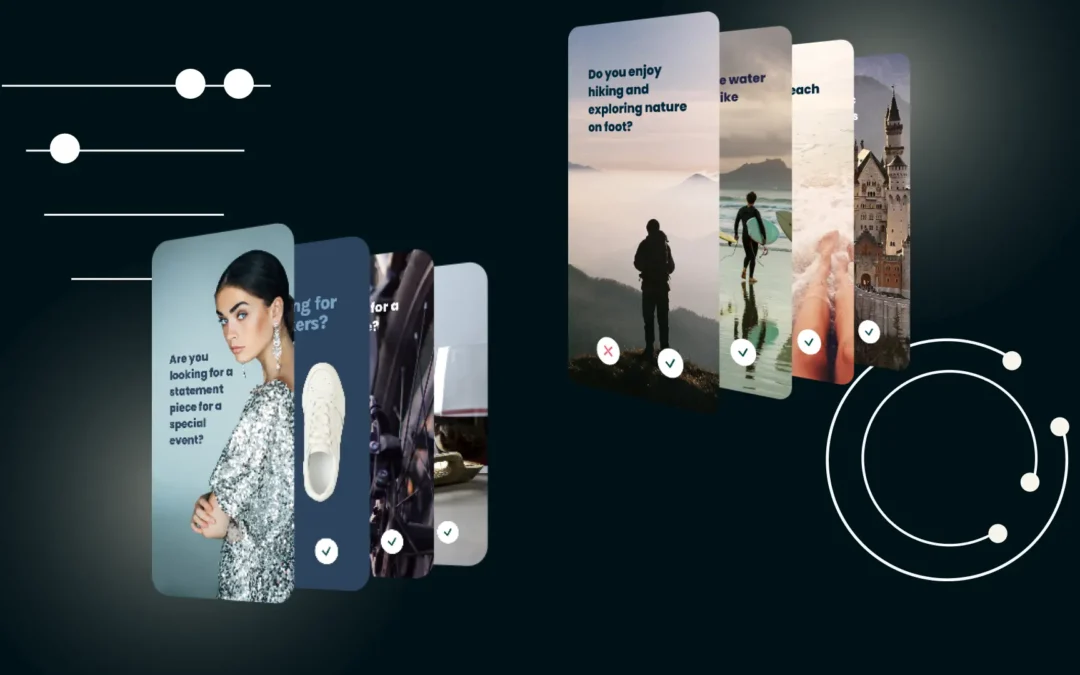
Engages users with visually driven, preference-based questions
Example:
A user browsing for home decor ideas might encounter questions like:
“Which interior style speaks to you?” (e.g., Scandinavian, Industrial, Boho)
“Which colors inspire you right now?”
“What mood are you trying to create — cozy, modern, minimal?”
Based on their answers, the Inspiration Guide presents curated product suggestions that align with their preferences, creating an engaging, low-pressure experience that invites further browsing.
Which One Should You Use?
Still wondering whether to choose the Product Guide vs Inspiration Guide? Here’s a simple breakdown:
Use the Product Guide if your users often arrive with clear needs and you want to help them find the right product fast.
Use the Inspiration Guide if your audience is more exploratory, looking for ideas and open to suggestions.
Many businesses find success in combining both tools to guide users from curiosity to conversion. By combining the two, you create a personalized journey that moves users from exploration to action — all while collecting valuable zero-party data that can further personalize their experience in future visits or email marketing.
At Roccai, we help brands build smarter user flows with both decision-based and discovery-based guidance tools. Whether you’re looking to drive fast conversions, inspire exploration, or do both, we’ve got the tools to help.
Too much data, not enough clarity — that’s the dilemma many brands face today. Unfortunately, many still rely on guesswork — using outdated tools like third-party cookies, tracking scripts, and inferred behaviors. These methods aren’t just ineffective; they’re becoming obsolete.
Instead of guessing what people want, why not just ask?
That’s the philosophy behind a more human, transparent approach to marketing. Real customer insight begins with real interactions — direct, intentional, and trust-based exchanges that deliver instant value.
Why Guessing Fails (And What It Costs You)
For years, companies have relied on tracking behavior to drive personalization. They’ve watched what users click, how long they stay, and where they scroll — trying to decode intent. However, this kind of data tells only part of the story.
In fact, relying on these weak signals can lead to irrelevant suggestions, missed opportunities, and a loss of customer trust. It also keeps brands in a reactive position, constantly adjusting after the fact.
When you rely on guesses instead of asking directly, your aim is always off—missed intent, opportunities, and trust.
As privacy expectations continue to rise and cookie-based tracking disappears, this guess-first mindset is becoming a liability.
Zero-Party Data: A Smarter, Safer Alternative
Fortunately, there’s a better way forward.
Zero-party data refers to information that users willingly and intentionally provide. Whether it’s through onboarding quizzes, swipe journeys, or simple prompts, this data comes directly from the source — your customers.
Unlike third-party data, which often lacks context or consent, zero-party data is clear, ethical, and precise. It reflects what people want now, not what they might have wanted in the past.
When powered by Roccai, collecting zero-party data becomes smooth. From the very first visit, brands can engage users through interactive guides that generate preference-based profiles. This means your personalization isn’t just faster — it’s meaningful from the start.
Turning Interactions into Real Customer Insights
Let’s say a new visitor lands on your site. Instead of tracking their clicks and hoping to figure out their needs, you show them a short, swipeable guide. They select their interests, goals, and product preferences. Within seconds, they receive personalized recommendations — no cookies required.
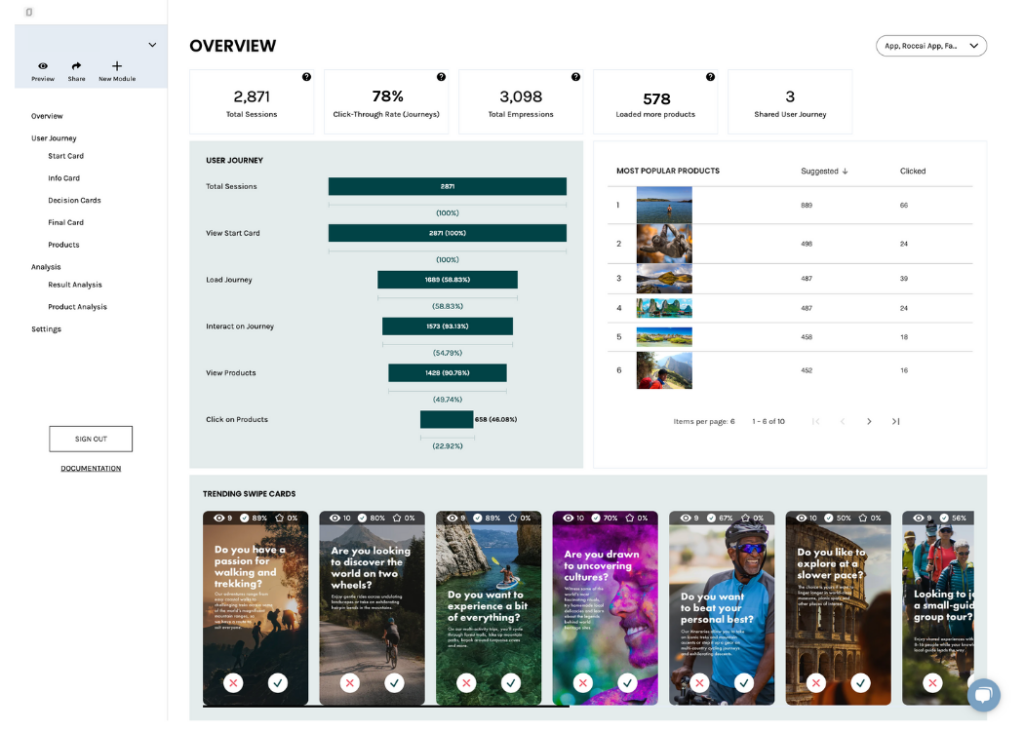
Behind the scenes, Roccai’s dashboard visualizes every data point in real time. Marketers can see live segments forming, track user input, and launch targeted campaigns with complete confidence.
The Roccai dashboard turns every customer interaction into live, visual insight — no cookies, no guesswork, just real preferences.
This approach transforms the way brands understand their audience. More importantly, it builds trust — because customers know exactly what they’re sharing, and why.
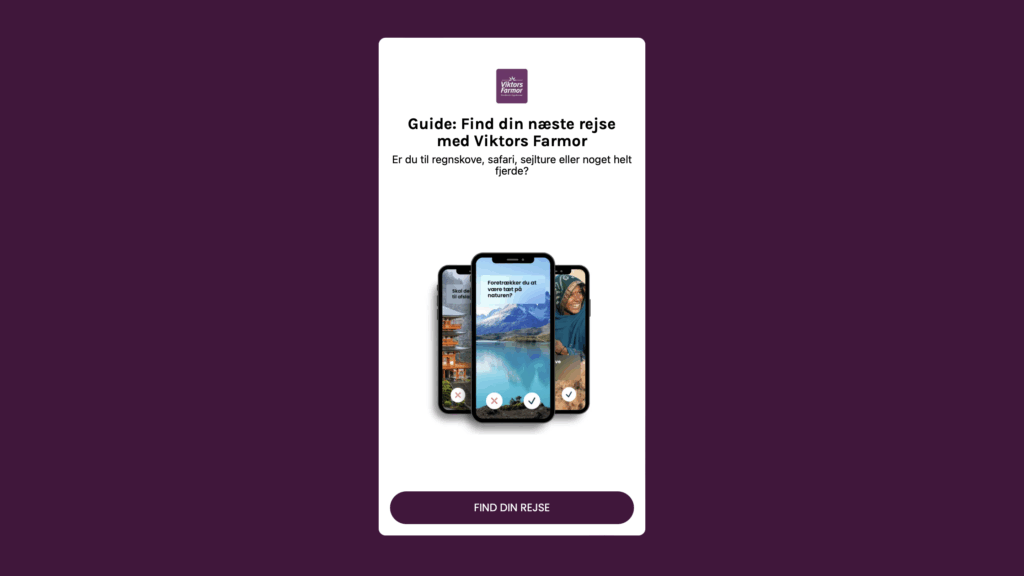
A Real Example: Viktors Farmor
Take Viktors Farmor, a Scandinavian brand that wanted to personalize its online experience without invading user privacy. By using Roccai’s persona guides, they invited customers to declare their preferences in a fun, frictionless way.
The results were immediate. They built richer segments, improved retention, and delivered tailored content — all without relying on cookies or behavioral tracking. Best of all, customers felt seen, not stalked.
The Future of Personalization Starts Now
It’s clear: guessing is no longer good enough. Today’s consumers expect relevance, transparency, and value from the very beginning.
When brands prioritize real interactions, they unlock real customer insight — insight that is not only more accurate, but also more respectful. Therefore with Roccai, you’re not chasing data; you’re creating a dialogue. And that changes everything.
So why wait for behavior when you can start with clarity?
"Learning to choose is hard. Learning to choose well is harder. And learning to choose well in a world of unlimited possibilities is harder still, perhaps too hard." — Barry Schwartz, The Paradox of Choice: Why More is Less
Drowning in Decisions
Modern life demands more choices than ever. From picking a health insurance plan to selecting a streaming subscription or deciding what movie to watch, we’re surrounded by decisions that seem small but can feel overwhelming. What should feel empowering often becomes exhausting.
This phenomenon is known as choice overload, when the number of available options becomes a barrier to making a confident decision. Instead of feeling liberated, people often become anxious, frustrated, or paralyzed by indecision.
You’ve probably experienced this yourself. Browsing through a new app, trying to choose a vacation rental, or standing in front of a fridge with five brands of oat milk—all moments when too many choices led not to satisfaction but uncertainty.
This isn’t just based on personal stories. Behavioral science confirms that when people are faced with too many alternatives, they tend to delay decisions, avoid them altogether, or regret their choices afterwards.
The Hidden Costs of Too Much Choice
Choice overload affects more than just the individual—it impacts business outcomes, engagement rates, and long-term satisfaction.
Research from Convertize shows that choice overload can lead to lower conversion rates, especially when users don’t receive help navigating options. When overwhelmed, people don’t just hesitate—they abandon the journey entirely.
This is evident in everything from online stores to academic catalogs to digital tools and subscription services. The problem isn’t that we don’t have enough options. It’s that we don’t have support in choosing the right one.
Even when decisions are made, they often come with doubt. Could I have picked something better? Did I overlook the right one? This post-decision regret is a classic symptom of choice overload and reduces long-term trust and satisfaction.
Choice Overload Is Everywhere
Choice overload exists in nearly every industry. When booking a hotel, choosing a software platform, choosing an education, or buying groceries online, users are expected to sift through long lists of options, each with subtle differences, similar benefits, and unclear value.
According to InContext Solutions, too many product varieties in a retail setting actually reduce the likelihood of making a purchase. This isn’t limited to physical products—it applies to services, experiences, and content as well.
And in a digital environment where attention spans are short, the cost of confusion is high.
How Do We Navigate the Overload?
The answer isn’t necessarily to reduce the number of choices. People still want variety. The key is to guide them through the options in a meaningful way, so they feel empowered instead of overwhelmed.
At Roccai, we help businesses and platforms solve this exact challenge by guiding users through thoughtful, intuitive questions that align with their preferences, needs, or moods.
By offering users clarity and direction, our tools bridge the gap between intention and action.
Introducing Roccai’s Two Decision-Guiding Tools
The Product Guide
Designed to filter and focus. The Product Guide asks customers a short series of Yes/No or multiple-choice questions, eliminating options that don’t match their needs. It’s especially useful when people have a goal but need support in narrowing down the path to get there.
It works across industries—from helping users select the right skincare products, to choosing the best service package, or identifying the most fitting educational path.
The Inspiration Guide
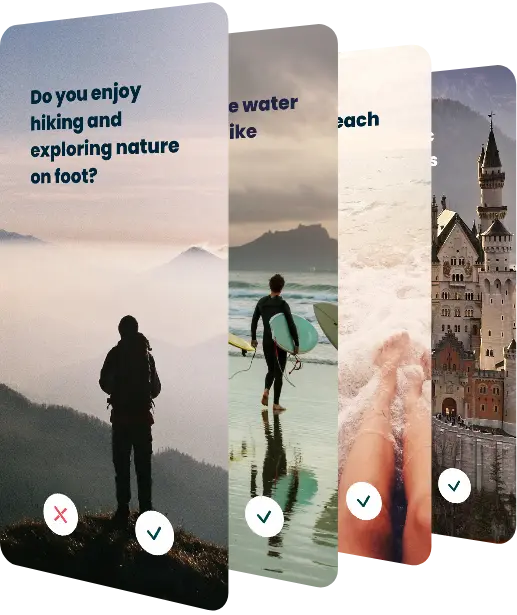
Designed to spark exploration. Unlike the Product Guide, the Inspiration Guide doesn’t remove options—it reveals new ones. By asking preference-driven or mood-based questions, it nudges users toward paths they might not have discovered on their own.
Whether it’s travel destinations, gift suggestions, or content libraries, the Inspiration Guide excels in helping people explore with direction, not chaos.
Why Guidance Works Better Than Simplicity Alone
Reducing the number of options isn’t always practical—or desirable. The key lies in curating the experience and offering decision support. When people feel seen and understood, they’re far more likely to complete an action and feel confident in their choice.
As explained in this behavioral research article, even when multiple options remain, the presence of a guide improves outcomes by minimizing mental load and building momentum.
Think of it this way: the difference between browsing 100 options alone and being walked through them by a helpful expert is massive.
Built to Be Flexible and Human-Centric
Roccai’s decision-guiding tools are designed to be:
Customizable for any type of product, service, or decision;
Brand-friendly with adaptable voice and visuals;
Respectful of privacy, by generating recommendations without tracking users’ past online interactions;
Quick to implement, embeddable in webshops, popups, newsletters etc.
This means the same guide logic can help a new parent choose baby equipment, a team pick their next project management tool, or a couple decide on a weekend getaway—all within their unique context.
The Bigger Picture: Empowering Decision-Making
At its core, solving choice overload is about restoring control and confidence to the user. It’s about asking questions that clarify needs and providing structure in moments that would otherwise feel chaotic.
Guided decision-making isn’t just a business strategy; it’s a service to the customer. It respects their time, their attention, and their goals.
Roccai was built with this in mind. Whether your customers need help filtering down or opening up to new possibilities, we’ve designed tools that bring focus to any decision.
Ready to Guide the Way?
Choice overload is real. But so is the opportunity to solve it: with empathy, insight, and the right guidance.
If you want to help your users navigate their choices more effectively, reduce decision fatigue, and improve engagement, Roccai is here to help.
Product Matching is a game-changer for e-commerce businesses in today's digital-first world. With the overwhelming number of choices available, consumers demand personalized and seamless shopping experiences. The ability to accurately match shoppers with the right products can mean the difference between abandoned carts and skyrocketing conversions.
Roccai leverages powerful AI and a proprietary machine learning algorithm to help businesses optimize product matching, ensuring customers find exactly what they’re looking for. But why is product matching so crucial, and how does AI revolutionize it? Let’s dive in.
What is Product Matching, and Why Does it Matter?
Product matching is the process of accurately associating similar or identical products across different data sources. This is particularly vital in e-commerce, where businesses must:
Provide customers with highly relevant product recommendations.
Avoid duplicate listings and incorrect product associations.
Enhance search and filter functionalities for an improved user experience.
Reduce customer frustration by displaying only the most relevant options.
Without accurate product matching, businesses risk frustrating their customers with irrelevant recommendations, which can lead to lower conversion rates and lost revenue.
For a deeper dive into product matching in e-commerce, check out this article by Forbytes: Product Matching in E-Commerce.
The Role of AI in Product Matching
With the rise of Artificial Intelligence (AI) and Machine Learning (ML), product matching has evolved significantly. AI-powered algorithms analyze vast datasets in real time, identifying patterns and relationships between products based on:
Textual Data: Product names, descriptions, and specifications.
Visual Recognition: Identifying similarities in product images.
Behavioral Insights: Understanding customer preferences through browsing history.
Roccai’s AI-driven product matching system ensures precise and accurate results, helping businesses eliminate errors and provide a seamless shopping experience. Additionally, our system integrates hyper-personalization to ensure product recommendations are tailored to each user’s unique preferences. (For more on hyper-personalization, read our blog post here).
The Benefits of AI-Powered Product Matching for E-Commerce
Here’s how AI-driven product matching directly impacts e-commerce success:
Higher Conversion Rates: Customers are more likely to purchase when highly relevant product suggestions are shown.
Improved Customer Experience: AI ensures users find what they need quickly and efficiently.
Reduced Return Rates: Accurate matching prevents customers from receiving incorrect or misleading recommendations.
Enhanced Inventory Management: Businesses can better organize and market their products.
At Roccai, we’ve developed our own machine-learning algorithm to enhance product matching accuracy. Unlike conventional e-commerce recommendation engines, our technology:
Uses real-time behavioral data to understand customer intent.
Employs deep learning models to recognize subtle product similarities.
Adapts continuously to changes in consumer behavior and market trends.
Roccai turns generic browsing and filtering into a personalized journey for each user with our Product Guide. In this solution, users will go through a series of Yes/No or multiple-choice questions, which will help them narrow down their choices, ensuring they find the perfect fit. Each question gives them insight based on their own needs, helping them make a confident and informed decision and finally matching them with the product they were looking for. Read more about our Product Guidehere.
Key Takeaways for Webshop Owners and Digital Marketers
To maximize the benefits of product matching in your e-commerce strategy, consider these essential tips:
Invest in AI technology that continuously improves product matching accuracy.
Ensure your product data is structured and clean to enhance algorithm efficiency.
Leverage customer behavioral insights to personalize recommendations.
Optimize for omnichannel experiences by ensuring consistency across platforms.
The Future of E-Commerce
AI-driven product matching is revolutionizing e-commerce, making it easier for businesses to connect customers with the right products. At Roccai, we empower businesses with cutting-edge AI and ML algorithms to optimize product discovery and drive conversions.
Want to see how Roccai’s AI can transform your e-commerce business? Contact us today!



 For example, when users respond to a quiz, customize their profile, or set communication preferences, they’re supplying zero-party data. This kind of data is gold for marketers because it comes straight from the source.





Recent Comments