

The Cold-Start Problem in Ecommerce
Personalization is supposed to make shopping easier. Yet most recommendation engines rely on historical data: past views, clicks, and purchases. This creates an immediate problem: what happens when a visitor has no history at all?
This is known as the cold-start problem: the moment when personalization fails because there is not enough data to build on. In e-commerce, it is especially damaging. First-time visitors, privacy-conscious shoppers, or users in niche markets often leave without finding what they want.
Why Traditional Recommenders Struggle
Traditional recommendation systems depend on “more data = better recommendations.” They perform well with repeat customers but break down when:
- A visitor is brand new
- Cookies are blocked or unavailable
- Browsing history does not reflect current intent
- Multiple users share a device
Instead of helping, traditional recommenders amplify choice overload: a problem we explore in depth in Choice Overload is Real — But You Can Guide the Way.
They show “popular” or “trending” items that may not fit, leaving visitors frustrated and more likely to bounce.
How AI Solves the Cold-Start Problem in E-Commerce
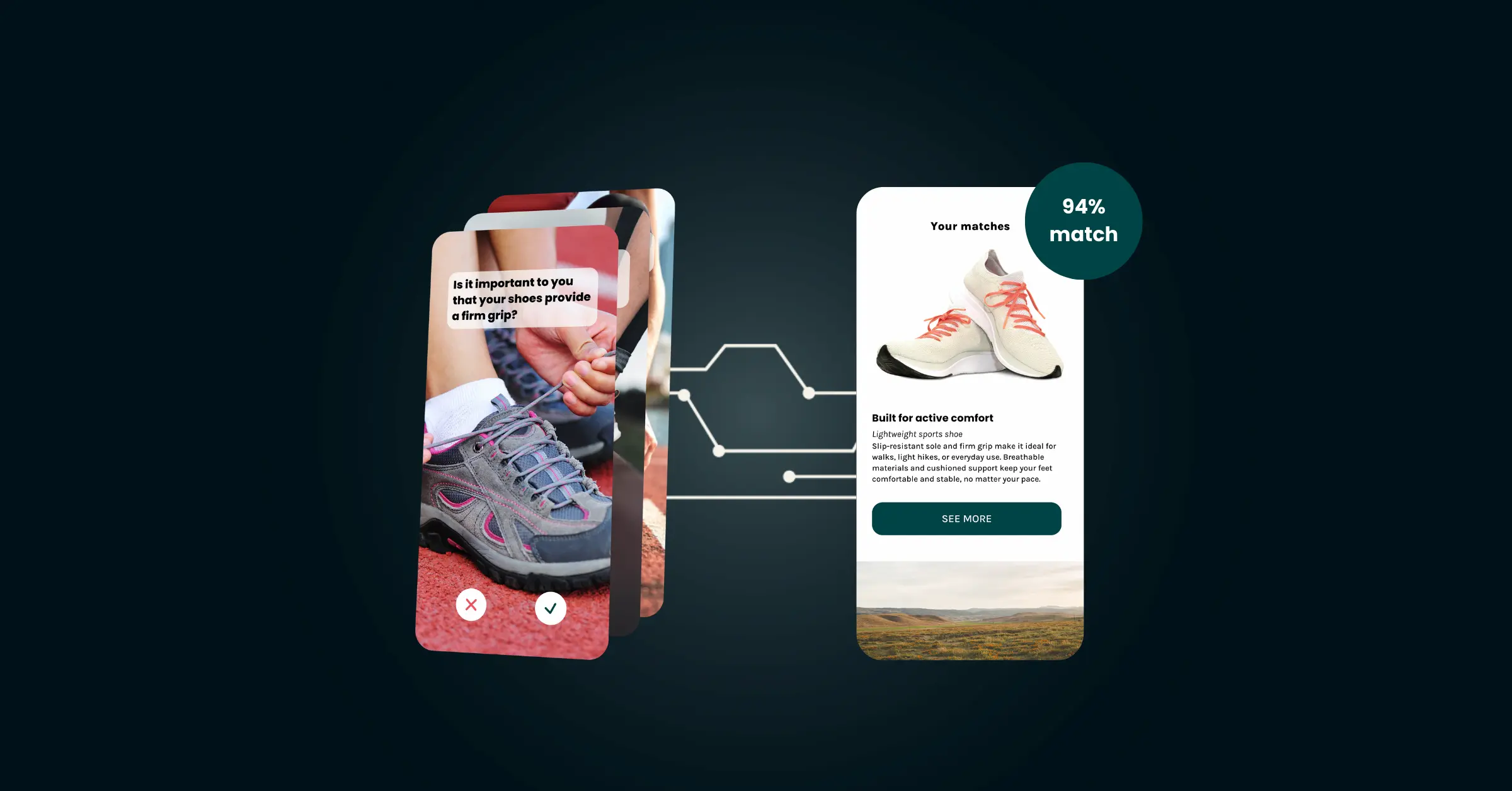
AI-driven personalization flips the model. Instead of waiting for historical data, it collects active signals in real time:
- A yes/no swipe
- A preference choice (eco-friendly vs. budget-friendly)
- A goal (“I’m looking for a family vacation”)
With every micro-interaction, the AI adapts the journey. In just a couple of answers, it can generate a relevant shortlist, solving the cold-start problem without relying on third-party cookies or endless browsing. This is why AI solutions outperform traditional recommenders.
Roccai’s Approach to Personalization
At Roccai, we built our guide platform to eliminate cold-start frustration from day one. Here’s how our solutions work:
- Product Guides ask a handful of simple, visual questions to map customer needs to the right items. The result is an immediate shortlist, even for first-time visitors.
- Inspiration Guides help undecided shoppers explore possibilities they might not have considered. Instead of “search and scroll,” they discover by answering quick questions.
- Group Recommendations (coming soon) allow families, couples, or teams to combine their inputs. This solves not only individual cold-starts but also the challenge of collective decision-making.
Because Roccai’s AI prioritizes declared preferences over historical data, it works even in cookieless environments. If you’re unsure which approach fits your journey best, Product Guide vs Inspiration Guide breaks down when to use each solution.
Why AI Cold-Start Solutions Matter for E-Commerce
According to McKinsey, personalization leaders outperform peers in revenue growth, highlighting why solving the cold-start problem is critical for e-commerce. When done right, cold-start personalization delivers clear benefits:
- Higher conversions: Instead of losing first-time visitors, you can guide them to relevant options in minutes.
- Better customer trust: Zero-Party Data collection means customers know exactly what they are sharing, making personalization transparent and GDPR-compliant.
- Faster decisions: Shoppers no longer drown in product grids. A guided journey reduces time-to-choice and improves the overall user experience.
- Actionable insights: Cold-start solutions don’t just help visitors. They also feed dashboards with valuable data about preferences, trends, and friction points.
FAQ: AI Cold Start E-Commerce & Personalization
What is the cold-start problem?
It’s the failure of traditional recommendation systems when there is not enough user history to generate relevant suggestions.
Why is the cold-start problem costly?
Because most site visitors are new or anonymous. Without personalization, they face choice overload and leave without converting.
How does AI solve the cold-start problem?
By using real-time, declared inputs instead of relying solely on past behavior. Active signals like swipes or preference choices enable instant personalization.
Is this GDPR-compliant?
Yes. Roccai collects Zero-Party Data directly from customers, which is both cookieless and compliant.
In a world where most visitors are anonymous, AI-powered personalization is no longer optional. It’s a competitive advantage.