
Product Matching Starts with Understanding What Customers Want
In short
Customer-to-product matching connects shoppers with relevant products using their needs, preferences and product information. Roccai Guide asks customers directly and uses their answers for recommendations. Roccai Growth Intelligence analyses the resulting preference and intent data to inform communication, sales follow-up and product decisions.

Two customers can look at the same product for very different reasons.
One might be comparing prices. Another might be wondering whether it suits a particular need. Their clicks look similar, even though the questions behind them are different.
For a business, that leaves a gap between knowing what someone viewed and understanding what matters to them.
Product matching becomes more useful when customers can explain what they are looking for. That creates two opportunities: helping the person make a choice and learning something the business can use again.
What is product matching?
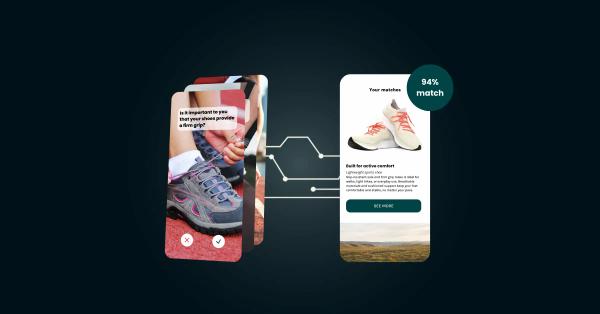
Customer-to-product matching connects a customer with relevant products using their stated needs, preferences and available product information. In e-commerce, it can help shoppers navigate a range and identify options suited to what matters to them.
The term also appears in catalogue management, where it describes identifying identical or similar products across different data sources. Here, the focus is on helping a person choose.
That requires a connection between two kinds of information: what the products offer and what the customer values.
Product information might describe materials, dimensions or technical specifications. Customers often think in terms of everyday needs: something comfortable for long days, suitable for a small room or easy to use without previous experience.
A useful matching experience helps connect those needs to relevant options. Our product discovery framework explores how asking, narrowing the options and recommending a shortlist can support that process.
What can customer answers reveal beyond clicks?
Imagine someone browsing running shoes.
You can see which models they open. Depending on your existing data, you may also know what they bought before. But there are still useful questions to ask:
- Where do they usually run?
- How often do they run?
- Is comfort or speed more important to them?
- What are they hoping to improve about their current shoes?
Each answer adds context that a product view alone cannot provide.
It also makes an important distinction visible: an observed action and a stated preference are different kinds of information. Both can be useful, but they tell you different things.
Roccai asks customers directly, adding their own answers to the information available for recommendations and customer understanding.
What is zero-party data in product matching?
Zero-party data is information people intentionally share with a business, such as their needs, preferences and stated plans. In Roccai Guide, customers share that information by answering interactive questions. Their responses can inform recommendations and provide structured data for analysis.
For example, “comfort matters more than speed” is a stated preference. “I plan to buy within a month” is a stated intention. Leaving the guide before finishing is an observed interaction. Keeping these signals distinct helps teams interpret what the data actually tells them.
Give customers a reason to answer
Before asking questions, make the benefit clear. Give customers a reason to share by showing what they will get from answering.
For product discovery, that benefit can be a relevant shortlist and help navigating unfamiliar options. The customer explains what matters to them, and their answers help shape the recommendation.
The questions need to earn their place. A useful starting point is:
What would we do differently if we knew the answer?
If a preference changes which products are relevant, it can help guide the recommendation. If it reveals an uncertainty, it may help identify what needs explaining. If it informs a later conversation, it can help someone prepare a more relevant follow-up.
This connects the questions to a practical purpose for both the customer and the business.
How does Roccai match customers with relevant products?
Roccai Guide collects customers’ needs and preferences through interactive questions and uses their answers to recommend relevant options.
The customer gets help making a choice. The business receives structured information about what the customer has shared.
The value depends on the information available on both sides. Product data needs to describe meaningful differences between the options. Questions need to capture preferences that help distinguish between them.
A request for “something easy to maintain,” for example, only helps the matching process if the available product information supports that distinction.
This is why the work extends beyond writing a few questions. Product information, customer language and the purpose of each answer need to connect.
What does Growth Intelligence reveal after the recommendation?
An individual answer can help with one recommendation. Responses across many customers can reveal patterns worth investigating.
Roccai Growth Intelligence analyses guide responses and interactions to explore common priorities, differences between groups, potentially unmet needs and where people leave the guide.
The context matters. Each answer is stored with the question, the card it came from and the entry point to the guide, such as a website or newsletter.
That helps preserve the meaning of the response. It also provides a basis for understanding differences between groups rather than treating every answer as part of one uniform audience.
A business can use this insight to investigate questions such as:
- Which needs appear repeatedly?
- How do priorities differ between customer groups?
- Are customers asking for something our current range does not address?
- Which parts of the guide may need closer attention?
The analysis describes the people who participated. Their responses can inform decisions without being treated as a complete picture of the market.
How can businesses use preference and intent data?
What customers share can remain useful after they receive a recommendation.
More relevant communication. Preferences can help teams choose which products, topics or messages to share next.
Better prepared follow-up. When responses are connected to a lead, a sales conversation can begin with the needs the person has already described.
Product and assortment decisions. Recurring preferences can highlight needs worth exploring and questions the current offer leaves unanswered.
A clearer understanding of the journey. Responses and drop-off patterns can help teams decide where to investigate further.
These are ways to use the data. The relevant systems, identifiers and workflows need to be agreed for each setup.
Preferences and intentions also need careful interpretation. Someone saying they plan to buy soon is sharing an intention. Completing a guide is an observed interaction. Neither guarantees a purchase.
Start with what you need to understand
A practical starting point is to choose one customer decision your business wants to support.
Identify what you already know, which assumptions remain and what you could ask that would change a recommendation or a business decision. Then give customers a clear reason to participate.
Roccai connects that exchange with structured data and analysis: helping an individual find relevant options while giving the business a way to learn from the conversation.
Want to explore what your customers could tell you? Book a demo to see how Roccai Guide and Growth Intelligence work together.


 Book a demo